
A paw print on a forest trail, movement high in the canopy, or a fin breaking the surface can completely change a day. Finding wildlife in its natural habitat takes patience. Animals may stay hidden, stray from the planned route, or appear only briefly before disappearing again.
The five destinations below provide opportunities to look for rare species in the ecosystems they depend on. None can guarantee a sighting, which is part of what separates wildlife travel from visiting a zoo or managed attraction. Go with an experienced guide where required, maintain the required distance, and allow the animals to determine how each encounter unfolds.
Spotting Black Rhinos Inside Ngorongoro Crater, Tanzania
An early descent into Ngorongoro Crater reveals grassland, woodland, wetlands, and the alkaline waters of Lake Magadi beneath the surrounding volcanic walls. Zebras, wildebeest, buffalo, and gazelles move across the crater floor, while lions and spotted hyenas may be seen near grazing herds. The crater also supports a small population of critically endangered black rhinos, although they may be distant or hidden by vegetation, and sightings are never guaranteed.
When considering luxury Tanzania safari tours, check whether the itinerary includes an early descent and enough time to explore different parts of the crater floor. Safari vehicles must remain on designated tracks, and guides should avoid crowding animals or blocking their direction of travel. Starting early may provide more time before traffic increases, but patience is essential. Even without a rhino sighting, the concentration of wildlife within the caldera makes the crater an important part of a northern Tanzania itinerary.
Tracking Bengal Tigers Through Ranthambore’s Forests, India
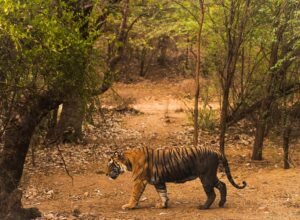
Ranthambore’s dry forest, grassland, lakes, and rocky ridges provide habitat for Bengal tigers, leopards, sambar deer, and langur monkeys. Safari drives follow designated tracks through zones containing old gateways, pavilions, and other remains associated with Ranthambore Fort. Guides listen for deer and monkey alarm calls that may indicate a predator nearby, but a tiger can remain concealed in the vegetation even when its presence is detected.
Morning and afternoon drives operate during set hours, with access, routes, and vehicle numbers controlled by park authorities. Tigers may appear near lakes such as Padam Talao or cross an open track, although neither the location nor timing of a sighting can be predicted. Staying quiet, remaining inside the vehicle, and following the guide’s instructions prevent the search from disturbing the animals. The ruins add historical context to the landscape, but the possibility of seeing a tiger still depends on patience and chance.
Watching Waved Albatross Nest on Española Island, Galápagos
Española supports nearly the entire breeding population of waved albatrosses. At Punta Suárez, the marked trail crosses uneven volcanic ground near nesting areas where adults may bow, circle their bills, and make clicking sounds during courtship. Their presence is seasonal, with most birds arriving between late March and May to breed before leaving by January. Exact timing varies, so an itinerary should not promise nesting activity or a particular stage of the breeding cycle.
Those curious about Galapagos island cruises may want to compare itineraries carefully, as not every route visits Española. The time of year also matters because waved albatrosses are absent from the island during part of the year. Blue-footed boobies, Nazca boobies, and Española marine iguanas may also be seen along the trail, but visitors must remain on the marked path and keep the required distance from every animal. The birds may appear unafraid, but this should never be taken as permission to approach them or interfere with their behaviour.
Searching for Sloths in Corcovado’s Rainforest Canopy, Costa Rica
Corcovado National Park protects lowland rainforest, rivers, beaches, and wetlands on the Osa Peninsula. Brown-throated three-toed sloths can be difficult to distinguish from leaves and branches high in the canopy, so finding one may require long periods of looking upward. Spider monkeys move more visibly through the trees, while scarlet macaws can sometimes be heard before they appear overhead. On the forest floor, tracks or movement in the undergrowth may indicate the presence of a Baird’s tapir.
Visitors must enter the park with an authorised guide and follow designated routes. Trails can be muddy, humid, and physically demanding, while river conditions and tides may affect access to certain areas. American crocodiles inhabit the region’s rivers and estuaries, but they should be observed only from a safe distance under the guide’s direction. No species is guaranteed, making patience and close attention more useful than trying to cover the trail quickly.
Diving Coral Gardens Alongside Sea Turtles in Queensland, Australia
On the Great Barrier Reef off Queensland, snorkelers and divers can explore coral bommies, reef walls, and channels inhabited by tropical fish, reef sharks, rays, and sea turtles. Green turtles may be seen feeding or surfacing for air, but swimmers should allow them plenty of space and never touch, follow, or block their path. Conditions differ between sites, with some shallow reefs suitable for snorkelling and deeper or current-affected areas requiring greater diving experience.
Boat trips to the outer reef may also stop near coral cays used by nesting seabirds and turtles. Access can be restricted to protect breeding animals, so visitors should follow all instructions about landing areas, marked paths, and viewing distances. Choosing an operator with qualified guides and clear environmental practices helps protect the coral while ensuring each activity matches the participants’ abilities. As with any wild encounter, seeing a turtle cannot be guaranteed.

Which wildlife encounter is calling you?
Think about whether you would rather search for wildlife in a forest, across open grassland, on a remote island, or beneath the water. Ngorongoro offers the possibility of seeing black rhinos on the crater floor, while Ranthambore is known for Bengal tigers moving through forest and historic ruins. Española provides seasonal nesting grounds for waved albatrosses, Corcovado requires careful searching beneath a dense rainforest canopy, and Queensland shifts the experience underwater among coral, turtles, and reef fish.
Before choosing, consider the season, physical demands, access rules, and amount of patience each experience requires. Wildlife sightings are never guaranteed, but careful planning can place you in the right habitat at an appropriate time. Follow local guidance, maintain the required distance, and allow the animals’ behaviour to determine what you see.
